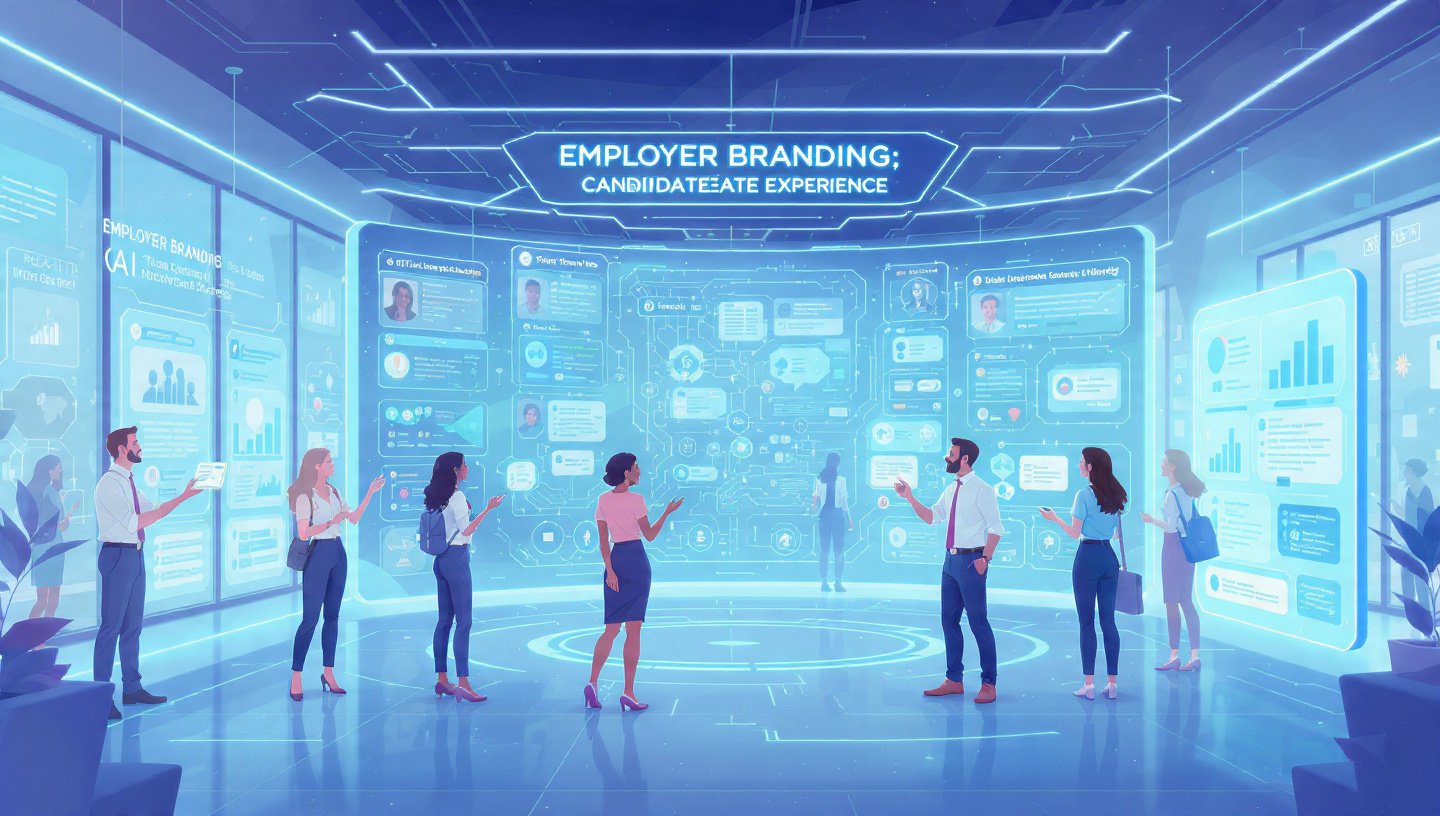
Employer Branding Candidate Experience
An easy, interactive job seeker experience is no longer a negotiable matter. Each touch point, such as initial advertisement of the job offer to last email response, will have an influence on the perception of the talent towards your company. According to experts, candidate experience refers to all of the interactions a job applicant has with your hiring process such as job descriptions, communications, interviews and follow-ups. In competitive labour markets a positive process has a direct positive effect on offer-acceptance and enhances your talent brand.
Enhancing the Candidate Experience
Communication is very important and should be clear and consistent. Job seekers will always demand frequent changes at each stage, as RecruitCRM suggests. Send some confirmation on receipt of applications and then continue receiving regular updates via emails or text messages. Candidates can be informed about the next steps with the help of automated email or SMS series (even chatbots on the websites). This engagement plan with candidates demonstrates that their time is respected and that they are not bored. As an illustration, one of the tips would be to have a recruiter as a point-of-contact to ensure that applicants know whom to contact at all times.
Follow-up and feedback on time. Don’t ghost candidates! Provide candid feedback to the unsuccessful candidates after every round of interviews. Rejections too should be delivered in a respectful and with reasons or resources. According to RecruitCRM, timely feedback (including negative news) has a good impression and contributes to the improvement of the candidates. Debrief schedules, such that the candidates are aware of the result and of what to do. Such post-interview touchpoints are also professional and can help to salvage relationships towards future roles. Actually, recruiters ought to play with the candidates as they would with their customers: each contact leaves an impression on the company image.
The most important strategies of candidate engagement:
- Periodical updates: Issue email/SMS acknowledgements and follow-up messages. Quick and concise messages (even templates) demonstrate that you respect the time of candidates.
- Process optimized to mobile: Make the careers page phone-friendly, and use one page apply forms. Job ads should be kept brief and use clear titles and bullet points.
- Individualized communication: Use the names of the candidates, make messages specific to their stage, and do not use generic dead-end types of responses. When possible, assign one recruiter contact.
- Interview preparation: Pre-interview brief the candidates on interview form and panel. An interview that is organized, respectful (not a series of redundant interviews) demonstrates professionalism.
- Feedback & surveys: Once the hiring has been made, short surveys or follow-up calls to gauge the sentiment of the candidates are to be done. Use this input to improve your process and show a continuous improvement.
The effect of Positive Journey on Boosting Offers and Reputation.
The high response rate and the employer brand are rewarded by an exceptional candidate experience. In one of the Gallup studies employees who had an exceptional recruitment experience at the point of employment were twice as likely to respond that their job was as promised during the recruitment process. More importantly, a study carried out by IBM revealed that applicants who were content with their job recruitment procedure were 38 percent more apt to accept an invitation. That is, a proper communication and an efficient application process will contribute significantly to the likelihood of a top candidate saying yes, rather than going to another place.
On top of short-term recruitment, fantastic experiences inspire good word-of-mouth. A majority of applicants (more than 60% of all) talk with their job hunt peers. In case they received a good experience, they might also turn out to be customer advocates as well, according to IBM, satisfied candidates were twice as likely to make a purchase with the company. On the other hand, one negative comment on the Internet can be fatal: a CareerPlug study states that more than 50 percent of job seekers had left a company after seeing negative Glassdoor ratings. And Applicantz discovered that half of the job seekers evade employers based on negative employer reviews. It is evident that hiring process defines your image in the eyes of the world. Having a dignified, honest experience during the journey will not only attract hires; it will also make your name great in the talent market.
Employer Branding in the Digital Age.
Online employer branding is important with candidates researching online. This is an act of narrating the story of your company in awesome ways in web and social media. Create an employment brand of authentic employee stories and company principles. According to Universum, storytelling is core to good employer branding - post authentic testimonials and day in the life copies that depict your culture. As an illustration, video advertisements or posts on blogs with different employees make potential employees imagine themselves in your company. An example of the application of the real-people imagery to humanize your brand and make it relatable
Your careers site cannot just be a list of jobs, it is an effective marketing recruitment tool. Invest in ad hoc design and depth. The best-in-class sites (such as the Rally Award-winning site of Delaware North), combine branding with functionality: video headers, interactive features and more than 200 stories of employees increased engagement lift tremendously. The major best practices are: include employee testimonials and photos; define your mission and benefits; go mobile-first; and plant easy call to actions (such as Apply Now) and quick application processes. Recruitment marketing also builds on content: blog posts, social media and email campaigns are used to emphasize the existence of vacancies with culture tid bits. To produce a better employer brand (both through its content and social campaigns), recruitment marketing, as a Careernet analysis observes, develops a more compelling employer brand.
Social Proof and Advocacy among the Employees.
Your best brand ambassadors are your employees. Make them post and company stories about jobs and companies on LinkedIn and other networks. Universum emphasizes that your greatest promoters of employer branding are the employees. Similarly, the industry specialists state that allowing employees to share their posts about their jobs (without being pressured to do so) increases visibility and credibility significantly.
Pro tip: Structure an official employee advocacy program. Share content or hashtags (but make them optional), and reward employees who share your culture on the Internet. This will automatically enhance your talent brand optimization namely the act of constantly refining your employer portfolio by accessing passive candidates within their circles.
Internet Reputation Management.
Your Internet reputation is not private and it is here to stay in the present-day reputation economy. When considering employers, candidates will visit Glassdoor, Indeed and even LinkedIn recommendations on a regular basis. Bad rating or comment by the star may drive away the best talent: 55 percent of applicants would not want to work in a company with unfavourable comments as highlighted. These sites should be monitored and controlled.
- Respond to reviews promptly and professionally. On Glassdoor or LinkedIn, reply to both positive and negative feedback. Glassdoor advises employers to reply even to old reviews, signaling that you listen. Thank reviewers for honest input and outline what steps you’re taking to improve. This turns a potential PR hit into a chance to showcase transparency.
- Encourage authentic feedback. Invite current employees to leave reviews on Glassdoor or LinkedIn without spinning stories. A stream of honest reviews (good and bad) gives a balanced, trustworthy picture of life at your company. Glassdoor recommends asking employees for “honest reviews” to attract candidates who fit your culture.
- Highlight positive reviews as social proof. Use snippets of praise on your careers page or social ads. Indeed reports companies with positive ratings see ~12% higher applicant rates. This can improve your employer net promoter score and reduce cost-per-hire (LinkedIn studies find strong employer brands cut hiring costs by ~43%)
- Address common concerns proactively. If multiple reviews cite issues (e.g. work-life balance), feature any new initiatives or success stories countering that narrative. Showing that you act on feedback enhances trust.
Conclusion
In 2025’s competitive talent market, HR teams must deliver exceptional candidate engagement strategies and laser-focused employer branding. Key actions include:- Map the candidate journey. Identify and optimize each touchpoint (awareness → apply → interview → offer). Remove friction (e.g. streamline forms) and continuously iterate using candidate feedback.
- Communicate clearly and often. Automated updates, mobile-friendly messages, and dedicated recruiter contact build trust. Ensure no candidate feels ignored.
- Activate employees. Encourage staff to post on LinkedIn/Glassdoor and participate in branded campaigns. Employee advocacy boosts authenticity and extends reach.
- Monitor reputation. Treat Glassdoor/LinkedIn reviews as vital feedback. Respond professionally and use positive reviews as proof points. A few negative comments won’t sink you – ignoring them will.
By treating candidates like valued customers and aligning your digital brand with the real employee experience, your organization will not only fill open roles faster but also emerge as an “employer of choice.” In sum, talent brand optimization and a smooth, human-centered recruitment process go hand-in-hand: together they maximize offer acceptance rates, candidate referrals and ultimately your company’s market reputation